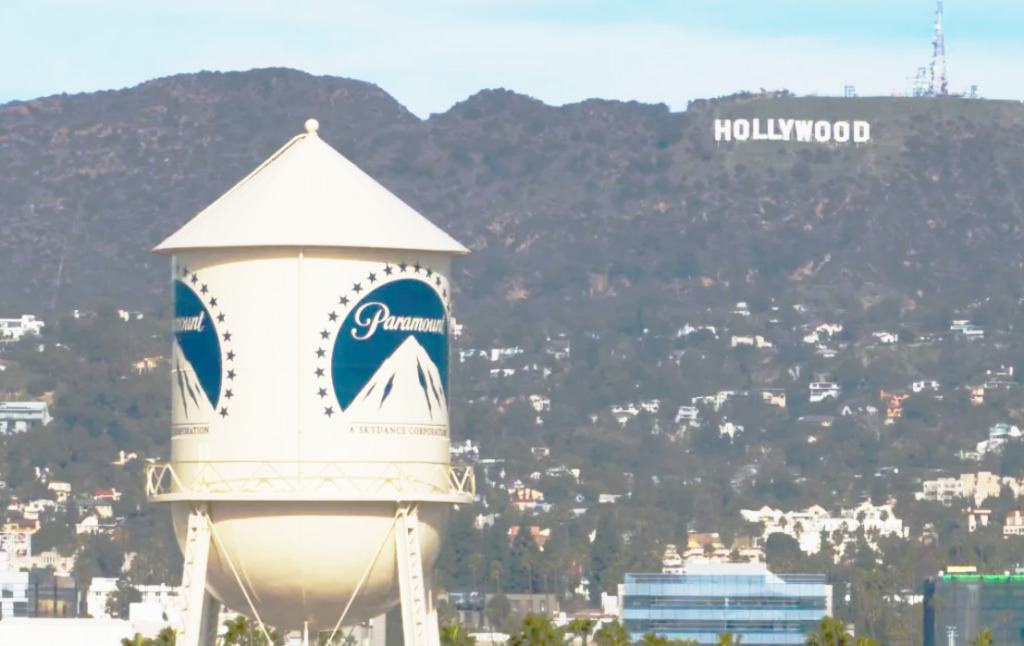
More than a thousand people who work in the entertainment industry have spoken out strongly against the proposed merger between Paramount and Warner. This huge deal, worth $111 billion, would bring together Warner Bros. and Paramount Global. Discovery, which made it one of the biggest media companies in the world. But a lot of people in Hollywood are worried that the merger between Paramount and Warner could hurt jobs, creativity, and the future of making movies.
An open letter that came out on Monday said “unequivocal opposition” to the merger between Paramount and Warner. A lot of famous actors, directors, writers, and producers signed the letter. Some of them are Denis Villeneuve, Kristen Stewart, J.J. Abrams, and Joaquin Phoenix. It’s clear what they mean: the merger of Paramount and Warner could hurt the industry in a number of ways.
The letter says, “The result will be fewer opportunities for creators, fewer jobs across the production ecosystem, higher costs, and less choice for audiences in the United States and around the world.” “This merger would cut the number of major U.S. film studios down to just four, which is very concerning.”
Worries About Jobs and Creative Freedom
The possibility of job loss is one of the biggest fears about the Paramount Warner merger. Hollywood has already had to cut back, and a lot of people think that merging two big studios will lead to even more cuts. When two companies merge, they often get rid of jobs that are the same, which can mean that thousands of people lose their jobs.
David Ellison’s company agreed to buy Warner Bros. Discovery in late February. After months of talks and even competition from Netflix, which made a rival bid but lost, this Paramount Warner merger was finally approved.
David Ellison has promised that the two studios will stay separate and that the new company will make about 30 movies a year. Even with these promises, many people in the business are still not sure how the Paramount Warner merger will affect things in the long run.
The open letter also talks about worries about creative freedom. Filmmakers may have a harder time pitching ideas and getting their projects approved now that there are fewer big studios. This could make stories less diverse and slow down new ideas in the industry.
The letter said, “We are very worried about signs of support for this merger that put the needs of a small group of powerful stakeholders ahead of the needs of the general public.” “The honesty, freedom, and variety of our industry would be badly harmed.”
Tom Dumont Parkinson’s diagnosis: Emotional message to fans
More and more people in Hollywood are against it.
Not just a few people are against the Paramount Warner merger. It has become a big movement with the support of powerful people and advocacy groups. Jane Fonda leads the Committee for the First Amendment, which is one of the groups that has helped organize resistance.
The Democracy Defenders Fund and the Future Film Coalition are also involved. They have worked together to get support from a lot of people in the industry. Ben Stiller, Don Cheadle, Javier Bardem, Lily Gladstone, Lin-Manuel Miranda, Tiffany Haddish, and Ted Danson are also among the signers.
Damon Lindelof, who is known for his work on “Watchmen” and “Lost,” is one of the most outspoken critics of the Paramount Warner merger. Even though Lindelof worked with Warner Bros. Discovery, he still talked about his worries on social media.
“Hollywood mergers mean fewer movies and TV shows, which means fewer jobs,” Lindelof wrote. When two storied backlots are owned by the same company, it’s easy to see what happens: one becomes a Ghost Town. I’m scared. But I’m not a spirit. And if you never fight, you’ve already lost the fight.
What’s next for the merger of Paramount and Warner?
The merger between Paramount and Warner is not yet complete. It still needs to be approved by shareholders and the government. These choices will probably decide whether the deal goes through or not.
If it goes through, the Paramount Warner merger would be part of a trend of big mergers in Hollywood. For instance, The Walt Disney Company bought 20th Century Fox for $71.3 billion in 2019. Deals like these have changed the entertainment industry, and now there are often fewer big companies that control a bigger part of the market.
People who support the Paramount Warner merger say that pooling resources could make the industry stronger and more competitive around the world. Critics, on the other hand, think that the risks are greater than the benefits, especially when it comes to job losses and fewer chances to be creative.
The Paramount Warner merger is still one of the most important and controversial issues in Hollywood today, even though the debate is still going on. The final choice could have long-lasting effects on filmmakers, workers, and audiences all over the world.