
On Thursday, President Donald Trump said that Israel and Lebanon had agreed to a 10-day “Israel Lebanon ceasefire” that would start at 5 p.m. Eastern Time. He called the move an important step toward ending weeks of fighting between Israel and Hezbollah.
President Donald Trump says that the deal came after he talked directly with important leaders in the region. He said that he talked to Lebanese President Joseph Aoun and Israeli Prime Minister Benjamin Netanyahu separately. They both agreed to start formal talks for a larger peace deal after the ceasefire between Israel and Lebanon goes into effect.
President Donald Trump wrote on Truth Social, “I just had great talks with the Highly Respected President Joseph Aoun of Lebanon and Prime Minister Bibi Netanyahu of Israel.”
He also said that Vice President JD Vance, Secretary of State Marco Rubio, and Chairman of the Joint Chiefs of Staff Gen. Dan “Razin'” Caine will help make the ceasefire between Israel and Lebanon last and turn it into a peace agreement.
President Donald Trump also said that both leaders might be invited to the White House for more talks. He called this the first real diplomatic meeting between Israel and Lebanon in decades.
The Israel Lebanon ceasefire agreement was made possible by diplomatic work.
After several days of secret diplomatic work between U.S. officials and regional mediators, the ceasefire between Israel and Lebanon was announced. President Donald Trump said the goal was to make it possible for the two countries to talk to each other, since they haven’t had direct communication at the leader level since 1983.
“Both sides want PEACE, and I think that will happen soon!” Donald Trump wrote that he was sure the ceasefire process between Israel and Lebanon would work.
There had been disagreement before about whether or not Lebanese President Joseph Aoun would talk directly to Israeli Prime Minister Benjamin Netanyahu. At first, Lebanese officials didn’t want to talk directly until a ceasefire was reached. But that changed when U.S. diplomatic pressure grew around the ceasefire framework between Israel and Lebanon.
According to Lebanese officials who spoke to Reuters, Aoun was not expected to talk to Netanyahu right away. Later reports, on the other hand, confirmed that talks with U.S. Secretary of State Marco Rubio helped move the negotiations along.
A high-ranking Lebanese official told Fox News Digital that internal political pressure in Lebanon made direct talks risky, especially while fighting was still going on. A lot of people in Lebanon said that there should be a ceasefire between Israel and Lebanon before any diplomatic contact with Israel.
Even so, the Lebanese presidency later confirmed that President Joseph Aoun and President Donald Trump had talked, which was a sign that the Israel-Lebanon ceasefire was moving forward.
Push for a Israel Lebanon ceasefire does not stop the conflict in the region.
Even after the ceasefire agreement between Israel and Lebanon was made public, tensions on the ground stayed high. There was still fighting between Israeli forces and Hezbollah in several places along the border, including the town of Bint Jbeil, which is known to be a Hezbollah stronghold.
Benjamin Netanyahu, the Prime Minister of Israel, said that Israeli troops were close to “overcoming” Hezbollah positions in the area. Israeli military leaders said their goal is to keep Hezbollah away from the border to keep northern Israeli communities safe, even during the ceasefire between Israel and Lebanon.
Despite the announcement of a ceasefire between Israel and Lebanon, Lt. Col. Nadav Shoshani, a spokesman for the Israel Defense Forces, said that Israeli troops are still keeping “defense lines” inside Lebanon to stop attacks.
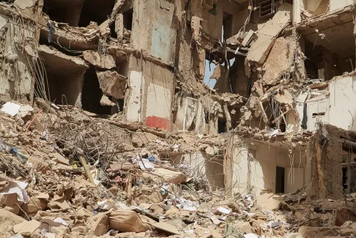
Meanwhile, officials in Lebanon said that infrastructure was badly damaged, including the destruction of bridges over the Litani River. Even though talks are still going on under the Israel-Lebanon ceasefire, Israeli forces have said that the southern region should be a “no-go zone” for Hezbollah activity.
US Military Planning Cuba Update: Tensions Reach Critical Point
Hezbollah fired rockets into northern Israel on Thursday, setting off air raid sirens. There were no injuries right away, but the event made people worry about how stable the ceasefire agreement between Israel and Lebanon is.
Lebanese officials say that more than 2,100 people have died and more than 1.2 million have been forced to leave their homes since March 2. This shows how much damage was done that led to the call for a ceasefire between Israel and Lebanon.
Israeli officials say that Hezbollah attacks have killed two civilians and 13 soldiers during the same time.
Even though violence is still going on, international mediators are still pushing both sides to keep the Israel-Lebanon ceasefire and turn it into a long-term peace deal.
What will happen Israel Lebanon ceasefire future peace talks?
The next few days will be very important for the ceasefire between Israel and Lebanon to work. The United States is expected to lead more talks with Vice President JD Vance, Secretary of State Marco Rubio, and military leaders to make the situation more stable.
President Donald Trump has said that he wants to bring both leaders to Washington, which could be the most important diplomatic step related to the Israel-Lebanon ceasefire since the early 1980s.
But there are still deep political divisions in Lebanon, especially because Hezbollah is against talking to Israel. Israel, on the other hand, says that military operations can go on until security gets better, even during the ceasefire between Israel and Lebanon.
People all over the world are keeping a close eye on the Israel-Lebanon ceasefire to see if it can last long enough to make peace last.
1 Comment