
The Hormuz strait crisis has gotten worse since Iran repeated its threat to limit the number of ships that can pass through the important waterway as long as the U.S. blockade of Iranian ports stays in place. The worsening crisis in the Hormuz Strait is putting pressure on fragile peace efforts and making people worry that the region will see more violence.
Pakistani officials and other mediators are working to extend a ceasefire that is set to end on Wednesday. But the worsening crisis in the Hormuz Strait has made talks harder and less certain.
Iran warns that shipping will still be limited during the Hormuz Strait Crisis.
Mohammed Bagher Qalibaf, the Speaker of the Iranian Parliament, made Iran’s position clear in a TV interview. He said, “We can’t go through the Strait of Hormuz, so no one else can.”
He also strongly criticized the U.S. blockade, saying it was a “naive decision made out of ignorance.” He said that even though there is a lot of tension around the Hormuz Strait crisis, Iran still supports peace efforts. However, trust between the two sides is still low.
He went on to say, “The gaps are still big, and some basic problems are still not solved.”
These comments show how the crisis in the Hormuz Strait is closely linked to bigger political and military disagreements between the US and Iran.
Hormuz strait crisis: uncertainty about the ceasefire and problems at sea
Iran had said before that the strait would reopen after a 10-day ceasefire between Hezbollah and Israel. But when Donald Trump said that the U.S. blockade would stay in place, Iran tightened its restrictions, making the crisis in the Hormuz Strait worse.
Did Iran Close the Strait of Hormuz? Tanker Attack Raises Alarm
After this, ships in the Persian Gulf were more careful. Reports say that two ships flying the Indian flag were shot at while they were in transit and had to turn back. This has added to fears about the crisis in the Hormuz Strait.
Because of this, maritime activity slowed down, and the waterway became tense and uncertain again, which had an effect on shipping routes around the world.
The Hormuz strait crisis: what it means for trade and oil around the world
The Strait of Hormuz is one of the most important oil transit routes in the world. About one-fifth of all oil in the world passes through it. The ongoing crisis in the Strait of Hormuz could stop this flow and raise energy costs around the world.
Any blockage along this route can make it harder to get oil and raise prices, which will put even more pressure on already weak global markets. Because of this, the hormuz strait crisis is not just a problem in the region; it is also a big problem for the world economy.
Iran sees control of the strait as a key strategic tool, and the US keeps its blockade in place to put pressure on Iran’s economy. This has set off a chain reaction of events that has made the hormuz strait crisis worse.
Hormuz strait crisis: diplomatic efforts are having a hard time calming things down
Iran says it got new proposals from the US, and the ceasefire is about to end. Pakistani mediators are trying to set up another round of talks in the hopes of easing tensions in the Hormuz Strait crisis.
Saeed Khatibzadeh said that what the U.S. does could hurt efforts to keep the peace. He said, “These, I can say, miscalculations are putting Americans at risk with the rest of the world and the global economy.” He also said that the U.S. is “risking the whole ceasefire package.”
The Supreme National Security Council of Iran also said that the blockade goes against the ceasefire agreement and that it would not let any partial reopening of the strait, making the hormuz strait crisis worse.
Hormuz strait crisis More military risks and tension in the region
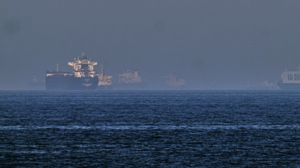
Recent events have made the crisis in the Hormuz Strait even worse. The United Kingdom Maritime Trade Operations said that Iranian gunboats shot at a tanker and a projectile hit a container ship.
India also summoned Iran’s ambassador after two of its vessels were targeted, showing how the hormuz strait crisis is affecting multiple countries.
Iran has said that it will keep strict control over the strait by setting routes, collecting fees, and giving permission to pass through. These steps show how well the crisis in the Hormuz Strait is being handled.
Hormuz strait crisis: a bigger war and an uncertain future
The ongoing war has already killed many people in several countries in the area. The crisis in the Hormuz Strait could make the region even more unstable if no deal is reached.
Ishaq Dar said that Pakistan is trying to “bridge” the gaps between the two sides and that more talks are expected soon.
Donald Trump, on the other hand, said that talks are still going on and that “very good” talks are happening, even though tensions are still high.
The future of the Hormuz Strait crisis now depends on whether diplomatic efforts can work before the ceasefire ends.
1 Comment