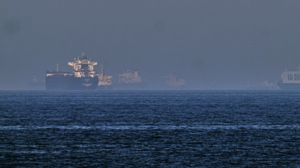
U.S. Iran military clash turns Strait of Hormuz into a contested war zone under fire. There has been a direct military clash between the U.S. and Iran in the Strait of Hormuz. American forces were attacked by missiles and drones while trying to reopen the waterway. The U.S. Central Command said that two merchant ships flying the U.S. flag successfully crossed the strait as part of an operation called “Project Freedom.” Iranian forces attacked the transit, firing cruise missiles, drones, and small boats at both commercial ships and some U.S. Navy ships. American troops responded by stopping the threats and sinking six small Iranian boats. A high-ranking Iranian officer, on the other hand, said that any foreign military presence would be attacked, and Iran’s Revolutionary Guard Corps called the U.S. claims “baseless.”
📊 Fast Facts – The Conflict by Numbers
U.S.-flagged ships transited
Iranian small boats destroyed
U.S. service members deployed
World oil trade via Hormuz
Under Fire – How the U.S. Iran Military Clash Unfolded in the Strait
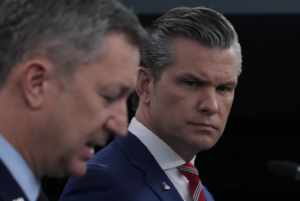
President Donald Trump said that if Iran attacked U.S. ships, the U.S. would respond with overwhelming force. He said that Iran would be “blown off the face of the earth.” On the other hand, a high-ranking Iranian officer said that American troops would be attacked if they “approach and enter” the strait. The operation quickly turned into a direct test of who was in charge of the waterway. Adm. U.S. Central Command Brad Cooper told reporters that Iranian forces started the operation by firing cruise missiles, drones, and small boats at commercial shipping. He said that U.S. troops “defeated every single one of those threats.” The two ships with U.S. flags went through without any problems, and more ships are expected to follow.
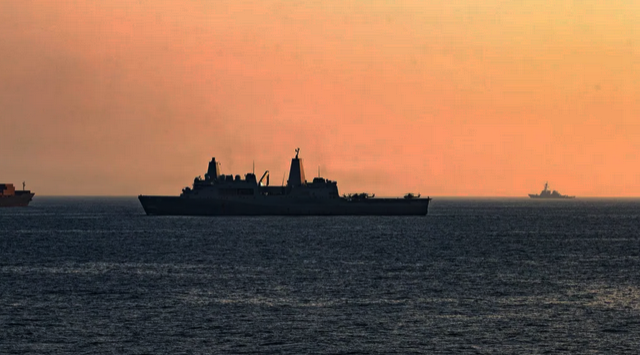
There are a lot of U.S. troops there: guided-missile destroyers, more than 100 planes, unmanned systems, and about 15,000 service members. Cooper said that the U.S. is not escorting ships one at a time, but is instead providing a “defensive umbrella” across the strait that includes naval, air, and electronic warfare capabilities. American troops spent weeks using high-tech tools to clear and check a transit route. They tested it by sending U.S.-flagged ships through it first. President Trump wrote on Truth Social that Iran had “taken shots at unrelated Nations” during the operation, including a South Korean cargo ship. He also said, “Maybe it’s time for South Korea to come and join the mission!”
Doubts Remain – Independent Voices Question the U.S. Iran Military Clash Narrative
Even though the Pentagon said it was a success, experts not connected to the government said to be careful. There isn’t much independent evidence yet that commercial shipping has started up again on a large scale, according to retired Marine Corps Col. Ray Gerber. He said that maritime tracking data and industry signals don’t yet clearly show that traffic has gone up. Gerber said, “We’re not really seeing much proof of it.” “Most of the industry says they are still waiting.” He also asked if the U.S. has done enough to protect against one of the biggest threats to the waterway: naval mines. He said, “If they’ve cleared a corridor, my first question will be, ‘So you’ve swept it for mines?'”
Iran 14 point proposal vs. US red line – who will blink first?
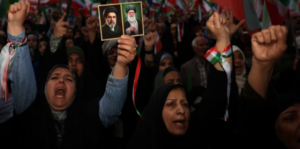
The operation is going on while a fragile ceasefire starts to fall apart. The United Arab Emirates said that its air defenses shot down ballistic missiles, cruise missiles, and drones that came from Iran. Iran has strongly opposed the U.S. operation. Ali Abdollahi, head of the Iranian military’s unified command, said that any foreign forces that enter the strait “will be attacked.” Iran’s Revolutionary Guard Corps also said that no commercial ships were able to pass through, calling the U.S. claims “baseless.” The changes make the strait effectively contested: the U.S. says it has opened a safe route for ships, while Iran says ships aren’t moving and threatens more attacks.
The Strait of Hormuz is responsible for about a quarter of the world’s oil trade by sea, so any problems there are a big worry for global markets. President Trump has called “Project Freedom” a humanitarian effort to help “neutral and innocent bystanders.” He says that many ships are running low on supplies. But he has also said that anyone who tries to get in the way will be met with overwhelming force. Gerber also said that even if the first transits go well, keeping the operation going could become more dangerous over time as Iran reacts to what it sees as a loss of power. “The Strait of Hormuz is Iran’s main point of leverage. He said that any changes to the status quo could lead to more active conflict. The next step is to see if more ships come and if attacks get worse. This will decide if the strait can be fully reopened or if it is still contested.