
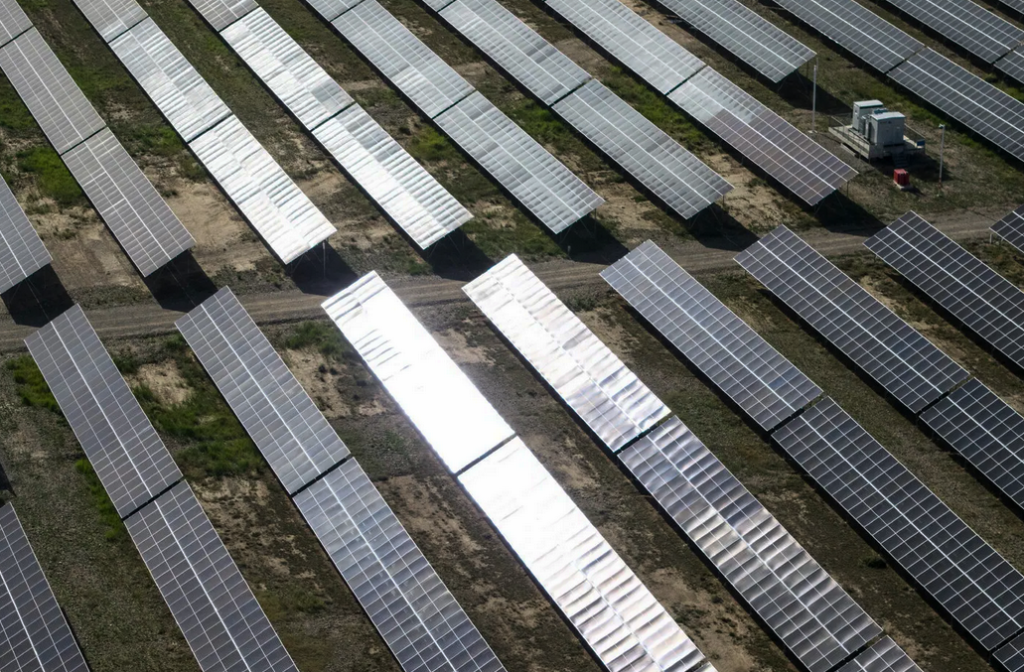
The China energy dominance is rapidly reshaping global power systems as the Middle East war disrupts oil and gas supplies worldwide. With rising energy insecurity, countries are turning to renewable energy and advanced grids, strengthening the China energy dominance in solar panels, batteries, transformers, and smart grid technologies.
The ongoing war in the Middle East has caused big problems with the supply of oil and gas around the world. This has made many countries rethink how they make and use energy. One of the biggest changes happening around the world because of this crisis is that renewable energy systems and advanced power grids are becoming more important. But this change also shows a new global reality: we are becoming more and more dependent on China.
Experts say that China’s dominance in renewable technology and grid infrastructure is growing as countries try to make their energy systems more stable. Governments are now putting a lot of money into alternative energy sources because the oil markets are unstable and supply routes like the Strait of Hormuz are under stress. This change is directly helping China’s industrial and technological strength.
China’s energy dominance in the world’s renewable infrastructure
It’s not by chance that China is the most powerful country in the world when it comes to energy. China has put a lot of money into renewable energy technologies like solar panels, wind turbines, batteries, transformers, and high-voltage cables over the past few decades. These days, Chinese companies make almost all of the important parts that modern electricity grids need.
Chinese companies were already expanding into other countries before the war in the Middle East got worse. They were already providing equipment for advanced power grids that support AI systems, which need a lot of power.
The switch away from fossil fuels was already happening in many countries. But the war has sped up this change. “This is the right time for a shock like the war in Iran to suddenly spark even more investment and interest in renewables,” said Cory Combs, an associate director at Trivium China, a research and advisory firm.
He also talked about how strong Chinese industry is, saying, “At this point, you can’t compete with China.”
China’s dominance in the energy sector is most clear in the battery storage market, where demand is growing quickly around the world. Industry experts say that global shipments of grid storage batteries almost doubled in the first three months of the year.
China’s energy dominance grows through investments around the world.
China’s dominance in energy goes beyond just making things. Chinese businesses are also aggressively expanding into other countries. Sungrow, for example, just said it would spend €230 million in Poland to build its first energy storage plant in Europe. Hithium, another company, wants to spend €400 million on a battery factory in Spain.
These investments show how much China’s dominance in the energy sector is changing the world’s energy infrastructure. More and more countries in Europe, Asia, and Latin America are using Chinese technology to build stable power systems.
Recently, officials in Brazil opened bids for new power plants and big battery storage systems. Larissa Wachholz, a partner at the consulting firm Vallya, said, “Brazil needs technology in this area, and China has a lot to offer.”
You can also see China’s energy dominance in Asia. For instance, the Philippines is quickly starting renewable energy projects to make its electricity supply more stable. Many of these projects use systems built in China.
China is still the world’s biggest supplier of rare-earth materials and solar equipment, which makes its position in the world even stronger. But some governments are worried about relying too much on Chinese supply chains.
China is the leader in battery technology and innovation.
Battery technology is one of the most important areas where China is in charge of energy. China is the world’s biggest producer of lithium-ion batteries, especially those used in electric vehicles and for storing electricity on the grid.
Strait of Hormuz Blockade: Trump’s Bold Move Shocks the World
The International Energy Agency says that China makes almost all of the lithium iron phosphate (LFP) batteries in the world. These batteries are safer and less expensive than older ones that use nickel and cobalt. They are great for big grid systems where space isn’t a big deal, even though they don’t hold as much energy.
Big companies like BYD and Contemporary Amperex Technology Ltd. (CATL) are in charge of China’s energy sector. BYD is now the world’s biggest maker of electric cars, and CATL is the world’s biggest exporter of batteries.
CATL has also grown quickly in other countries to meet rising demand in Europe and Asia. A spokesperson for the company said that demand for home and grid storage systems has skyrocketed, especially in areas where the power supply is unreliable.
Companies in China have to come up with new ideas quickly and cut costs because of fierce competition at home. Frank Haugwitz, a consultant in China’s solar industry, said that Chinese companies have had to deal with “brutal domestic competition that forces them to keep coming up with new ideas in order to stay in the game.”
This competitive environment has made China the most powerful energy player in the world.
China’s energy dominance and the future of global power systems
China’s energy dominance goes beyond hardware to include software systems that control the flow of electricity in smart grids. Some countries are worried about security risks, but they keep buying Chinese equipment because it is cheap and has cutting-edge technology.
Experts say that renewable energy with battery storage is now almost as cheap as fossil fuels. Cory Combs said that improvements in technology have brought down costs by a lot, making renewable systems more competitive around the world.
The Chinese government has also helped a lot with the growth of renewable infrastructure. President Xi Jinping has said that he wants to increase the amount of wind and solar energy by six times what it was in 2020, to 3,600 gigawatts.
This big expansion strengthens China’s energy dominance and keeps Chinese companies at the center of the global energy transformation.
China’s role in providing energy infrastructure is likely to grow even more as the demand for electricity around the world continues to rise, especially with the growth of AI and digital industries.


1 Comment