
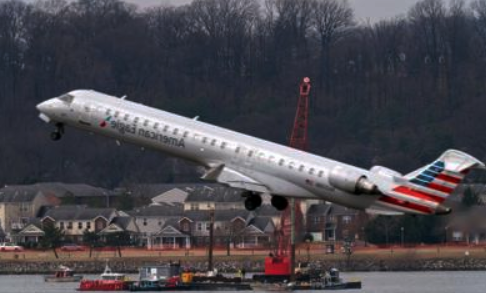
The U.S. House of Representatives has passed a big bill to make flying safer. The bill is meant to stop disasters like the deadly midair collision near Washington, D.C. last year. But senators and families of victims are already speaking out against the proposed law, saying it doesn’t do enough to make flying safe.
The Alert Act, as it is called, passed the House on Tuesday with strong support from both parties. But even though it has a lot of support in the House, lawmakers now have a tough job of making changes in the Senate to deal with safety issues that experts, lawmakers, and victims’ families have raised.
The Alert Act aims to make it easier to keep track of planes and lower the chance of crashes in busy airspace, especially near major airports.
What Happened in the Deadly Midair Crash That Caused the Alert Act
The push for the Alert Act comes after a sad accident in which an American Airlines passenger jet and a U.S. Army Black Hawk helicopter crashed near Washington, D.C. When the two planes crashed into the Potomac River, all 67 people on board died.
People have said that the crash was the worst aviation disaster in the United States since 2001. There were 28 people from the figure skating community among the victims, which made the tragedy even worse for sports families all over the country.
Later, investigators from the National Transportation Safety Board (NTSB) found that the crash was caused by a number of long-standing safety problems. These included bad helicopter routing near Reagan National Airport, pilots and air traffic controllers not being able to see each other clearly, and too much reliance on the “see and avoid” system.
The Alert Act wants to fix these problems by making it mandatory for planes to use better tracking systems that give pilots information about their location in real time.
Important Parts and Issues with the Alert Act
One of the main parts of the Alert Act is that planes flying close to busy airports must have Automatic Dependent Surveillance-Broadcast In (ADS-B In) systems. These systems give pilots up-to-the-minute information about planes that are close by, which greatly increases their situational awareness.
Safety experts think that if these kinds of systems had been in place and working at the time of the crash, it might not have happened. Since 2008, the NTSB has been suggesting similar technology improvements.
Jennifer Homendy, the chairwoman of the board, has said before that modern tracking systems could have warned pilots sooner and helped avoid the deadly crash. The NTSB also said that most commercial planes already have ADS-B Out systems that send out their own location, but they don’t have the receiving capability that ADS-B In does.
The Alert Act also says that future collision avoidance systems must be installed with ADS-B In technology. This will give pilots both visual tracking and automatic alerts about nearby planes.
Raskin 25th Amendment Bill Could Change U.S. Politics
But not everyone agrees with the bill as it is now.
The Air Line Pilots Association has said that the combined requirements could cause delays in implementation because the new collision avoidance systems are still being certified.
Families of the victims are also worried. They say that the Alert Act doesn’t have strict deadlines for when it has to be put into effect, and that it might let military planes keep flying without letting people know where they are during regular training flights.
Before the House vote, the group of families said:
“January 29, 2025, made it clear what is at stake: the 67 lives lost that day should be honored by a better system that stops this from happening again.”
The group also said, “And the flying public should not have to wait longer than necessary for those protections to be in place.”
Congress is having a debate about making the Alert Act stronger.
Republican Rep. Sam Graves from Missouri and Democratic Rep. Rick Larsen from Washington were the ones who pushed for the Alert Act. With a strong 396–10 vote, it passed the House. This shows that there is rare agreement between both parties on reforming aviation safety.
Even though this support is there, some senators, like Republican Sen. Ted Cruz of Texas and Democratic Sen. Maria Cantwell of Washington, have said the bill still needs work. Cruz wrote on X before the vote, “A warning to my colleagues in the House: the Alert Act would not deliver the safety measures necessary to prevent another midair collision, as it lacks the critical improvements our aviation system needs.”
Families of the victims and aviation experts say that the bill needs to fully carry out all 50 of the NTSB’s recommendations in its final report in order to make the safest improvements possible.
Democratic Rep. Suhas Subramanyam, whose district was directly affected by the crash, stressed that the problem was not caused by just one thing. “It wasn’t just one thing that caused this crash.” Subramanyam said during the debate that “systemic problems” made our national airspace unsafe.
The Alert Act’s Rules for Military Flights and Safety Concerns
Military aviation rules are another important issue that people are arguing about when it comes to the Alert Act. Army helicopters could turn off their tracking systems during some flights to hide where they were at the time of the crash.
But later, investigators found that the helicopter that crashed was on a training mission, not a sensitive mission. This made them wonder if the exemption should have been used.
Families of the victims are now asking for stricter rules to make sure that military planes can’t turn off locator systems during normal flights in shared airspace.
The NTSB says that the crash could have been avoided if both planes had been using ADS-B In technology.
The Alert Act’s next steps
The Senate will now look at the Alert Act and try to work out changes that could make the bill stronger or change it before it is passed.
The law is one of the biggest changes to aviation safety in years, but Congress is still deciding how to best balance safety improvements, military operations, and regulatory timelines.
But for the families of the victims, the message is clear: the Alert Act needs to do more to make sure that this kind of tragedy never happens again.

1 Comment