
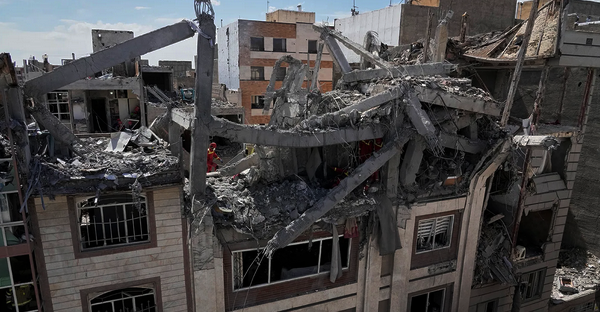
The United Nations Development Programme (UNDP) has released a new report that says the ongoing U.S.-Israeli war with Iran could have terrible effects on the whole world, possibly forcing more than 30 million people into poverty. The study shows that the U.S.-Israeli war with Iran is not only bad for the Middle East, but it also puts developing countries’ economies at risk.
The UNDP’s 27-page report, which came out on Tuesday, says that rising energy costs, food prices, and slow global economic growth could push as many as 32.5 million people into poverty. The report stresses that the war between the U.S. and Israel and Iran is causing a chain reaction that is spreading far beyond the area where the fighting is happening.
How the War Between the U.S. and Israel and Iran Is Putting Pressure on the World Economy
The UNDP said that the U.S.-Israeli war with Iran is having a big effect on the world’s markets, especially those for food and energy. Transportation and production costs are going up because oil and gas prices are going up. This is making basic goods more expensive around the world. Food prices are also going up because of problems with supply chains.
The report says that the Gulf region, Asia, sub-Saharan Africa, and small island developing states are especially at risk. These areas already have limited financial resources, which makes it harder for them to deal with sudden economic shocks like the U.S.-Israeli war with Iran.
Iran itself has been hit hard. The UNDP says that the country has lost about a year and a half of progress in human development in just the first month of the war. This shows how much the U.S.-Israeli war with Iran is hurting education, health care, jobs, and the quality of life.
US-Iran Talks Enter Critical Phase – What Comes Next?
Alexander De Croo, the head of the UNDP, warned about the effects of war on development in general:
“War is development going backwards. “Conflict can undo in weeks what countries have built over years,” said Alexander De Croo, head of the UNDP. “This new study shows that the shock of the conflict getting worse in the Middle East isn’t just affecting the countries that are directly involved; it’s also hitting those with the least money to deal with higher food and energy prices.”
He said more:
“For these countries, the crisis makes it impossible to choose between stabilizing prices now and paying for health, education, and jobs later. That is not okay, and it can be stopped. “Early policy action matters.”
The UNDP said that the war between the U.S. and Israel and Iran is making the economy unstable, and it could take years for weak countries to get back on their feet if it isn’t dealt with right away.
Casualties, talks of a ceasefire, and ongoing tensions
Along with the economic warnings about the U.S.-Israeli war with Iran, human rights groups say that the number of deaths is still rising. The U.S.-based Human Rights Activists News Agency (HRANA) says that at least 1,701 civilians, including at least 254 children, have died in Iran since the conflict began. These numbers came out just before a short ceasefire went into effect.
HRANA also said that the next day, there were at least 20 attacks in Iran in a 24-hour period, but no one was hurt in any of them.
There have also been failed diplomatic efforts during the U.S.-Israeli war with Iran. U.S. and Iranian officials met in Pakistan over the weekend, but they couldn’t come to an agreement on Iran’s nuclear program or a long-term peace deal.
JD Vance, the U.S. Vice President, said that there had been some progress but no final agreement.
“Whether we talk more or get to a deal, I really think the ball is in the Iranian court because we put a lot on the table,” Vice President JD Vance told Bret Baier on Fox News’s “Special Report.”
Iranian Foreign Minister Abbas Araghchi said that the talks were hard but that both sides were honest about them.
“But when we were only inches away from the ‘Islamabad MoU,’ we ran into maximalism, moving goalposts, and a blockade,” he wrote on social media. “Zero lessons learned.” Good things lead to good things. Hatred breeds hatred.
These talks that didn’t work out show how the U.S.-Israeli war with Iran makes it harder to work together, even as humanitarian and economic issues get worse.
UNDP Suggestions to Make Less of a Global Impact
The UNDP has suggested a number of emergency measures to help countries deal with the economic effects of the U.S.-Israeli war with Iran. These include up to $6 billion in targeted cash transfers to help families in need, as well as short-term subsidies or vouchers for cooking gas and electricity.
The UNDP, on the other hand, said that broad energy subsidies are not a good idea because they often help wealthier households more than those in need and can become too expensive over time.
Experts say that the U.S.-Israeli war with Iran could make inequality worse and slow down efforts to help the world recover, especially in poorer countries that are already having trouble with inflation and debt.
The report ends by saying that quick action is necessary to avoid the worst outcomes and lessen the effects of the U.S.-Israeli war with Iran on the rest of the world.
1 Comment