
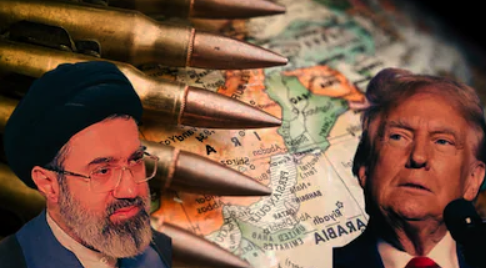
The most recent round of talks between the US and Iran about nuclear weapons has shown both hope and deep disagreement between the two countries. During talks in Pakistan over the weekend, US and Iranian officials exchanged ideas for easing tensions and possibly ending the ongoing conflict.
Senior officials from both sides say that the main goal of the US-Iran nuclear talks was to stop Iran’s uranium enrichment program. Iran said it would stop enriching uranium for up to five years. But the Trump administration turned down this idea and instead called for a much longer suspension of 20 years.
Even though the two sides are far apart, the US-Iran nuclear talks show that an agreement might still be possible. Officials from both countries said they are thinking about having a second round of face-to-face talks, but they haven’t set a date yet.
US-Iran nuclear talks are still going on, even though military tensions are rising.
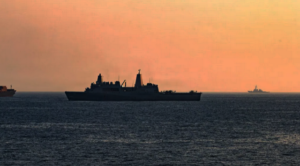
The situation on the ground has gotten worse, even though diplomatic efforts are still going on. President Trump said he would block Iranian ports not long after the US-Iran nuclear talks ended without a deal. The blockade started on Monday morning and is meant to force Iran to agree to U.S. terms.
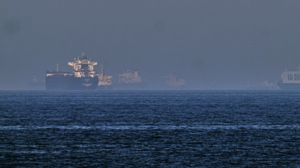
The U.S. military said that it would stop ships from “entering or leaving Iranian ports and coastal areas,” but it would still let other ships pass through the strategically important Strait of Hormuz.
Iran Blockade Explained: Why Allies Are Dividing Fast
Iran then gave strong warnings. A spokesperson for the Islamic Revolutionary Guard Corps said they would “introduce new methods of warfare.” Ebrahim Zolfaghari, another Iranian military spokesman, said, “If Iranian ports are attacked, no port in the Persian Gulf or the Sea of Oman will be safe.”
These events show that the US-Iran nuclear talks are still going on diplomatically, but the risk of military escalation is still very high.
Iran had already made it hard for Western ships and oil tankers to get to the Strait of Hormuz before the blockade. About 20% of the world’s oil passes through this area, making it one of the most important trade routes in the world.
What the US-Iran nuclear talks mean for the world and how the oil market reacted
The ongoing war and uncertainty surrounding the US-Iran nuclear talks have had a big effect on global markets, especially oil prices. Since the war started in late February, oil prices have gone up a lot, sometimes by more than 50%.
The price of Brent crude oil hit $102 per barrel on Monday before dropping to about $99. These changes show how uncertain things are because of the military situation and the fact that the US-Iran nuclear talks are still going on.
Some countries have been hesitant to back the U.S. blockade, which makes things even more complicated. Several European leaders said they wouldn’t take part, and at least one oil tanker linked to Iran seemed to break the blockade by continuing on its route.
This situation shows that the US-Iran nuclear talks are not just a problem for the region; they are also a problem for the whole world because they affect trade routes, energy supply, and international relations.
Wider regional conflict makes US-Iran nuclear talks more difficult.
There is a bigger conflict in the region that includes the US-Iran nuclear talks. The war between Israel and Iran and the tensions with Hezbollah in Lebanon have made it even more important to find a diplomatic solution.
Recent news says that fighting is still going on in some places. The Israeli military has been active in border towns, and talks about a cease-fire are still going on. Iran has said that any cease-fire should also include Lebanon, which makes the US-Iran nuclear talks even more complicated.
The number of people who have died in the conflict keeps going up. Reports say that at least 1,701 civilians have died in Iran, and hundreds of them were children. More than 2,000 people have died in fighting in Lebanon in the past few weeks. Gulf countries and Israel have reported more casualties, including military personnel.
These numbers show how important it is for the US and Iran to talk about nuclear weapons and find a peaceful solution.
The future of US-Iran nuclear talks is still up in the air.
The US-Iran nuclear talks are still up in the air, but both sides are getting ready for possible future talks. There are signs that a compromise could be reached, but the differences over important issues, especially how long nuclear restrictions should last, are still big.
At the same time, military actions like the blockade and threats of revenge are making things worse. The US-Iran nuclear talks will only be successful if both countries are willing to give up something and put diplomacy ahead of war.
The world is watching closely right now because the next steps in the US-Iran nuclear talks could have a big impact on the future of the Middle East and world peace.
1 Comment