
The Artemis II mission was first planned as a scientific trip to learn more about space. The mission ended well on Friday when the spacecraft landed safely in the Pacific Ocean. Four astronauts went around the moon on the historic Artemis II mission. They collected data, took pictures, and tested important life-support systems that will be needed for future deep-space exploration.
But the Artemis II mission quickly turned into something much more than just a science project. It made the astronauts on board and millions of people watching from Earth think deeply about what it means to be human, what life is, and where we fit in the universe.
Jim Davis, a pastor in Orlando, Florida, said, “You just look up and feel wonder, grandeur, and smallness all at the same time.” He and some members of his church watched the launch on April 1. They went outside to see the rocket go up into the sky together.
The Artemis II Mission Makes People Think Deeply
During the 10-day Artemis II mission, people all over the world were reminded of how big space is. At the same time, it showed how fragile and connected human life can be.
Christina Koch, one of the astronauts on the Artemis II mission, said, “I just felt so moved by looking at the moon.” She talked about a short but strong moment when the moon suddenly felt real and important.
“It only lasted a second or two, and I couldn’t even make it happen again, but something suddenly threw me into the lunar landscape, and it became real.”
Eric Swalwell Assault Allegation —Is This the End of His Campaign?
Space exploration has seen things like this before. Frank White, a philosopher who studies space, came up with the term “overview effect” to describe how astronauts often feel. When astronauts see Earth from space and realize how small it is compared to the vast universe, they go through an emotional and mental change.
A theologian at the University of Oxford named Andrew Davison made this idea very clear. He said that one of the most important things that Artemis II taught him was how it shows both the best and worst of people at the same time.
He went on to say, “We are a kind of being that can hold that whole universe in our minds.”
The Artemis II Mission’s Long-Term Effects
A lot of people thought of earlier space milestones, like the Apollo 11 Moon Landing, when they heard about the Artemis II mission. Ron Garan, a former astronaut, remembered watching that moment as a child and thinking that the world would never be the same.
Garan himself went to space later in life and spent six months on the International Space Station. He talked about how being in space changes the way you see things.
He said, “But when I was in space, for the first time in my life, I was outside the frame of the masterpiece looking in.” “That changes everything.”
Astronauts often talk about how space travel makes them feel emotionally and even spiritually. Edgar Mitchell, who flew on the Apollo 14 Mission, once had a powerful realization.
He said, “The molecules in my body and the molecules in the spacecraft were made in an old generation of stars.” “It was a subjective visceral experience with ecstasy.”
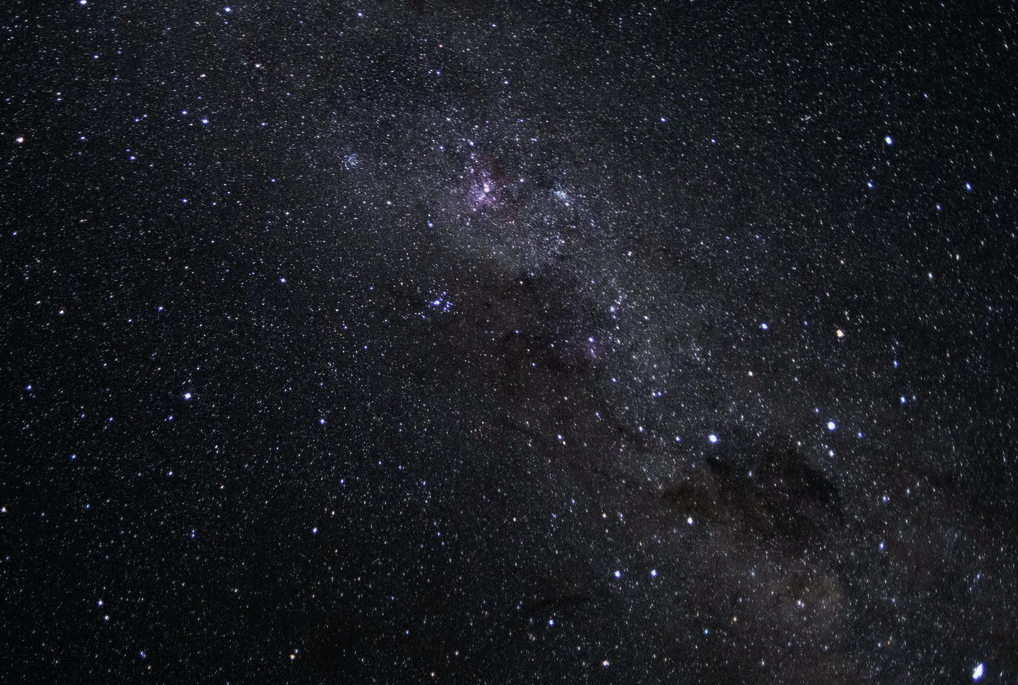
The Artemis II mission is a reminder that you can still feel things like this, even if you haven’t been to space. The night sky can make you think and feel the same things.
Jo Marchant, who wrote The Human Cosmos, said that people have always been connected to the stars. Stargazing has influenced religion, philosophy, and even politics from ancient times to the present day.
But today, things like technology and light pollution make it harder for people to spend time looking at the sky. People like Troy D. Allan are still trying to make that connection happen again. He plans camping trips for people to see the night sky in all its glory as part of a program at Utah State University.
Allan asked, “What happens to people when they come across beauty, silence, vastness, and mystery?” “It’s the resetting of our lives.”
The Artemis II mission has done just that for millions of people all over the world. It made people remember how great things we have done and how small we really are in the universe. At the same time, it showed something powerful: that even though we are small, we can think, explore, and learn about the universe.



1 Comment