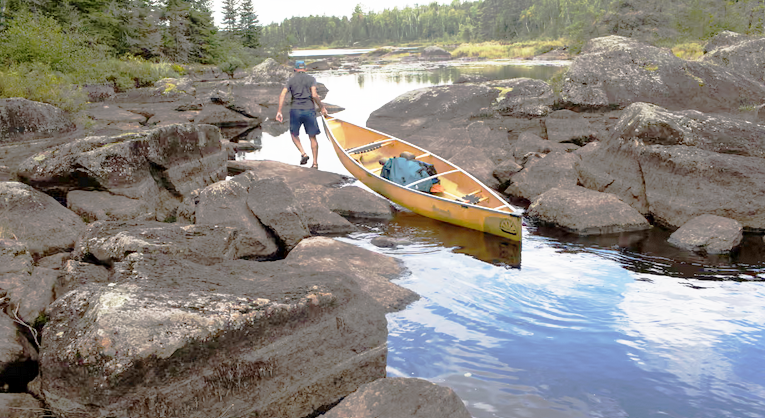
The vote to mine the Boundary Waters has sparked a big political and environmental debate all over the United States. On Thursday, the U.S. Senate barely passed a resolution to lift a long-standing mining ban near the Boundary Waters Canoe Area Wilderness, which is one of the most popular and protected natural areas in the country. The vote to mine in the Boundary Waters passed by a narrow margin of 50 to 49. This effectively lifted a 20-year ban that had been in place since 2023 under former President Joe Biden. The House of Representatives had already passed the bill, and now it will go to Donald Trump, who is expected to sign it into law.
Boundary Waters Mining Vote Opens Door for Big Project
The vote to mine in the Boundary Waters is seen as a big win for Twin Metals Minnesota, which is owned by the Chilean mining company Antofagasta PLC. For a long time, the company has been trying to get permission to build a copper and nickel mine just a few miles from the protected wilderness area. People who support the Boundary Waters mining vote say that the project could make domestic mineral supply chains stronger and make the country less dependent on foreign sources for important metals. They also talk about the possible economic benefits, like the fact that it could create hundreds of jobs in the area.
A Twin Metals spokesperson called the Boundary Waters mining vote “a critical moment for our nation’s ability to strengthen our mineral supply chains.” The company also said that any mining project would have to go through a strict and thorough review process by the government before construction could start. The spokesperson said, “Any proposed project in this area, including Twin Metals, must go through a years-long, multi-agency regulatory review before it can get the permits it needs to start building a mine.”
There is a lot of opposition to the Boundary Waters Mining Vote.
Environmental groups and some lawmakers have strongly opposed the Boundary Waters mining vote, even though it makes economic sense. People who are against mining in the area say it could hurt the environment in a big way, like polluting the water in the lakes and rivers that are connected. Before the Boundary Waters mining vote passed, Democratic senator Tina Smith from Minnesota spoke out strongly against it.
FISA Section 702 Extension Sparks Heated Clash Between Lawmakers
She said that the choice would “green light exposure of this national treasure to the highly toxic and destructive impacts of sulfide or copper mining.”
Smith also said that the measure was “the opposite of ‘America first'” and raised concerns about who owns the company that is working on the project. She went on to say, “The mining company in question is owned by a foreign company, will use Chinese state-owned smelters, and then sell the metals it gets on the open market.”
Smith told her supporters not to give up after the vote.
“Don’t give up hope.” The fight isn’t over yet. We should all be proud of the group we put together to fight this.
Lawmakers are split on the Boundary Waters mining vote.
The vote on mining in the Boundary Waters also showed that political parties are not all on the same page. Most Republicans were in favor of the resolution, but two Republican senators, Susan Collins and Thom Tillis, voted against it with Democrats. At the same time, Josh Hawley didn’t vote, which made the already close outcome even more uncertain.
The close margin shows how controversial the Boundary Waters mining vote has become, with lawmakers trying to find a balance between economic and environmental concerns.
Boundary Waters Mining Vote Raises Environmental Concerns
Environmentalists have strongly criticized the outcome of the Boundary Waters mining vote, saying it is a big step back for conservation efforts. Ingrid Lyons, the executive director of Save the Boundary Waters, said that the decision was a big threat to a beloved natural area.
She said, “It is a dark day for America’s most beloved wilderness area, the Boundary Waters Canoe Area Wilderness, and a clear warning for public lands across the country.”
She went on to say, “Minnesotans and the American public as a whole have been very clear: this famous place needs to be protected.” Today, the people who say they speak for them ignored them and, even worse, shut them up. But of course, it’s not over, and we’ll always keep fighting. The Boundary Waters mining vote is a bigger issue for many environmental groups about how public lands should be managed and protected in the future.
There are still legal problems with the Boundary Waters mining vote.
The proposed mining project is not guaranteed, even though Congress has passed the Boundary Waters mining vote. Before moving forward, Twin Metals will still need to get federal leases and state permits, according to experts. Environmental groups are also likely to sue over the project, which could slow down or even stop its progress.
This means that the Boundary Waters mining vote makes mining more likely to happen in the area, but it doesn’t mean that the project will definitely happen.
The Boundary Waters mining vote leaves the future up in the air.
The vote to mine in the Boundary Waters has started a long and complicated fight over the future of one of America’s most beautiful natural areas. On one side are people who see a chance to make money and keep the country’s resources safe. On the other hand, there are those who are afraid of permanent damage to the environment.
As things change, the Boundary Waters mining vote will probably stay a big topic of discussion in the US about conservation, energy, and economic policy.

1 Comment