
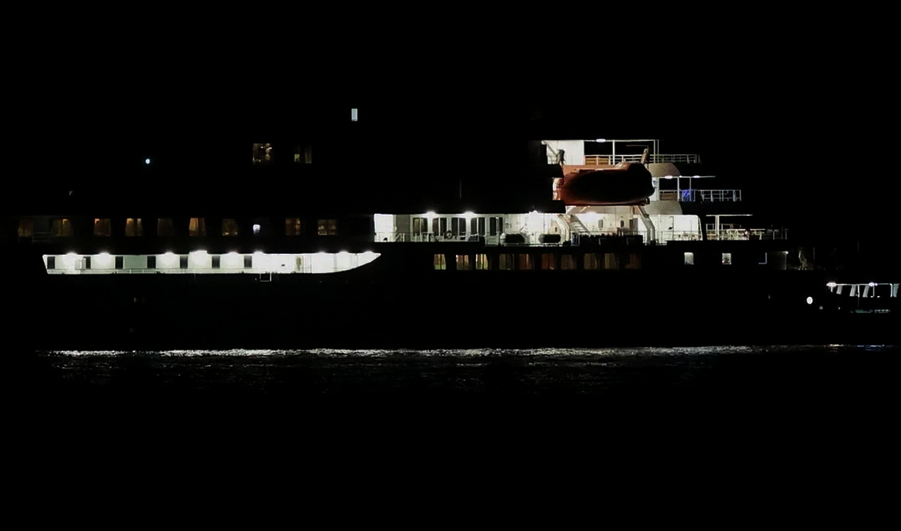
Hantavirus outbreak on cruise ship kills 3. Disembarkation begins in Canary Islands. CDC sends team, Americans to quarantine. The first passengers have started to disembark from a Dutch-flagged cruise ship that was hit by a deadly Hantavirus outbreak, after the vessel arrived in Spain’s Canary Islands early Sunday morning. Health officials said so far no one left on board was showing symptoms of hantavirus.
📋 Key facts from the Hantavirus outbreak on MV Hondius
- Ship: Dutch‑flagged MV Hondius, operated by Oceanwide Expeditions.
- Arrival: Canary Islands (Tenerife) early Sunday morning.
- Cases: At least 9 confirmed/suspected hantavirus cases, including 3 fatalities: a Dutch couple (70M, 69F) and a German woman.
- On board: Nearly 150 people from >15 countries, including 17 Americans, plus ~60 crew.
- Evacuation: Launch boats (5‑10 people max) to shore. Spanish passengers first, then sequenced flights to Netherlands, Canada, Turkey, France, UK, Ireland, US, Australia, etc.
- US response: CDC and HHS sending plane; Americans to Offutt Air Force Base, then biocontainment unit at University of Nebraska Medical Center (individual rooms, quarantine).
- WHO: Director‑General Dr. Tedros traveled to Tenerife; says risk low, “not another COVID.”
- Virus: Andes strain (from Latin America, human‑to‑human possible). Spread by rodent urine/droppings; symptoms up to 8 weeks.
- Timeline: Dutch man sick April 6, died April 11; wife died April 26 in South Africa; German woman died May 2. Others evacuated to Netherlands, Switzerland, South Africa, etc.
- Itinerary: Sailed April 1 from Ushuaia, Argentina, visited South Atlantic islands, Cape Verde, then Canaries.
There have been at least nine confirmed or suspected cases tied to the outbreak, including three deaths, a Dutch couple and a German woman. The MV Hondius had been carrying nearly 150 people from more than 15 countries (including 17 Americans) when it sailed from Cape Verde to the port of Granadilla on Tenerife after Spain agreed to take the ship.
Kristin Smart disappearance: Parkinson speaks
The ship’s operator, Oceanwide Expeditions, says all passengers and some of the roughly 60 crew will begin evacuating Sunday using launch boats that carry a maximum of five to 10 people.
Hantavirus evacuation: How staggered flights and US quarantine are playing out
📊 Timeline of the Hantavirus outbreak and key numbers
April 1: Ship sails from Ushuaia, Argentina.
April 6: Dutch man develops symptoms.
April 11: Dutch man dies on ship.
April 21‑24: Ship at St. Helena; 32 passengers disembark (including Dutch woman).
April 25‑26: Dutch woman dies in South Africa; test confirms hantavirus.
April 28: German woman shows symptoms.
May 2: German woman dies on ship.
Sunday (current): Ship reaches Canary Islands; disembarkation begins.
Numbers: 9 cases, 3 deaths, 17 Americans, 150+ people on board.
The Hantavirus outbreak necessitated a complicated evacuation plan. First Spanish passengers, then a flight to the Netherlands for Germans, Belgians, Greeks and part of the crew. Then, as planes are ready, flights will leave for Canada, Turkey, France, Great Britain, Ireland and the U.S.
The final flight will be to Australia, which will have to send its own plane, scheduled for Monday and carrying some passengers from New Zealand and the Asian region. There will be no health screenings on land. Passengers will be bused to the plane and out of Tenerife as soon as possible.
After disembarkation a skeleton crew will take on supplies and head for Rotterdam, Netherlands, a voyage of some five days.” The CDC said it is sending a team of epidemiologists and medical professionals to the Canary Islands to evaluate the risk of exposure to each American passenger and recommend monitoring levels.
Risk assessment of Hantavirus outbreak – “Low risk” say WHO and CDC
There are concerns about the Hantavirus outbreak, but health officials are calling for calm. Hantaviruses are spread to people from rodents through urine, droppings or saliva and symptoms can take up to eight weeks to develop. The Andes strain (seen in Latin America) is the only one known to spread human-to-human.
WHO Director-General Dr. Tedros Adhanom Ghebreyesus, who visited Tenerife before the ship’s arrival, said the risk to the public was “low.” “This is not another COVID and the risk to the general public is low. So they should not be afraid. They should not panic,” he said. Acting CDC director Dr. Jay Bhattacharya agrees, saying, “Hantavirus is not transmitted by asymptomatic people, transmission requires close contact, and the risk to the American public is very low.” The source of the outbreak is under investigation. But the Dutch couple who died had been bird-watching for weeks in Argentina, Chile and Uruguay, where the rodent carrying the Andes virus lives.
The man died April 11 (no samples taken); the wife died April 26 after testing positive. The German woman died on May 2. Three other patients were flown to the Netherlands; a Swiss man in Zurich; a British man evacuated to South Africa; and another British national hospitalized on Tristan da Cunha.
California, Georgia, Texas, Virginia and Arizona state health departments are monitoring Americans who came back to the U.S. prior to the outbreak. The 17 Americans will be flown back to Offutt Air Force Base in Omaha on a CDC/HHS plane, and then transferred to a biocontainment unit at the University of Nebraska Medical Center. Each will have a room to quarantine for an unspecified amount of time once removed from the Hondius.
What’s next after the Hantavirus outbreak?
All passengers will be repatriated by early next week. Americans will quarantine in Nebraska. The ship’s skeleton crew will sail to Rotterdam. WHO and CDC continue to monitor for any new cases. The investigation into the exact source continues, but the risk to the general public remains very low.