
After 21 hours of intense talks in Islamabad, Pakistan, the most recent round of US-Iran negotiations fails, and both sides are still far from reaching an agreement. The talks fell apart because there were big disagreements on important issues, even though both sides tried to find common ground.
In one sentence, Vice President JD Vance summed up the result:
“They have decided not to agree to our terms.”
But from Iran’s point of view, the talks not going well tells a different story. Iranian officials say that the US wasn’t ready to negotiate fairly, which is why the US Iran negotiations failed.
Conflicting Stances Cause US-Iran Talks to Fail
The US-Iran talks don’t work because the two countries can’t agree on very much. Iranian leaders think that what the US wants is much more than what was achieved during the recent war.
Former Foreign Minister Javad Zarif was very angry about what Vice President JD Vance said.
Javad Zarif wrote, “Bingo.” “No talks, at least not with Iran, will work based on ‘our/your terms.'”
This answer shows that Iran is unhappy with how the US is acting. Iranian officials say that talks should be based on understanding, not pressure.
Medhi Tabatabei, who is the deputy to Iran’s president, also made Iran’s point of view clear.
Medhi Tabatabei said, “We are open to talking and working things out.” “But we will not give in to force.”
Why China Taiwan Relations Resume Could Change Everything
These strong statements show why the US-Iran talks aren’t working: both sides are still sticking to their guns.
Strategic Power Struggle in US-Iran Talks Fail
Another important reason why US-Iran talks don’t work is the ongoing fight for strategic advantage. Each country thinks it has the upper hand.
U.S. officials say that the war has caused a lot of damage to Iran. They think this gives them an edge in talks. Vice President JD Vance made this point clear by saying that the US had made its “red lines” very clear.
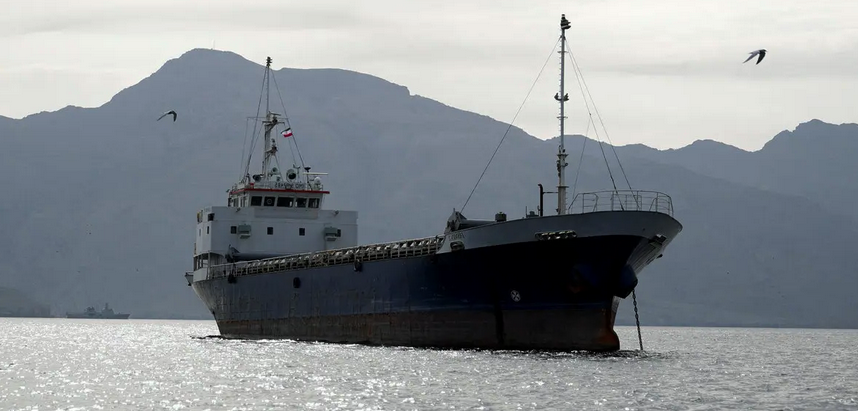
Iran, on the other hand, thinks it has gotten stronger by getting through the war. Iranian leaders think that having control over the Strait of Hormuz is a strong weapon. This important waterway is a major route for oil shipments around the world.
This point was made clear by Gen. Mohammad Bagher Ghalibaf, the speaker of Iran’s Parliament.
“We will not stop for a moment in working to protect what we have accomplished in the last forty days,” he said.
Ali Akbar Velayati, a senior adviser, also said that Iran’s current strategy is like defenses from the past.
He said, “Just as the ‘Abu al-Hayat Pass’ once stood for keeping outsiders out, the Strait of Hormuz is now firmly in our hands.”
This strategic competition is a big reason why the US and Iran can’t reach an agreement: neither side is willing to give up its edge.
Economic Risks and Uncertainty About the Future After US-Iran Talks Fail
If the US and Iran talks fail, the effects on the world economy could be bad. The Strait of Hormuz is a major oil route, and any problems there could cause energy prices to go up around the world.
Donald Trump has already said that he will take strong action.
He said, “Any Iranian who shoots at us or at peaceful ships will be BLOWN TO HELL!” “Iran will not be able to make money from this illegal act of extortion.”
These kinds of comments make things worse and make it harder to negotiate in the future. Experts say that more fighting could make the economy unstable.
Ali Vaez, a senior analyst, made the risks very clear.
“They could hold their ground for another two months, if not more.” “And in terms of money, I don’t think there is a limit to how much more pain the Iranians are willing to put up with,” he said.
He asked an important question:
“The real question is: Is the Trump administration ready to pay the high economic cost?”
These worries show that the US-Iran talks failing could have effects on the whole world for a long time.
Long-standing Problems Behind US Iran Negotiations Fail
Many experts aren’t surprised that these talks didn’t work out. For decades, the US and Iran have had a tense relationship.
Iranian leaders still think about how President Trump pulled out of the nuclear deal in 2018. This choice hurt trust and made it harder to reach agreements in the future.
Iran’s Foreign Ministry spokesman, Esmail Baghaei, said:
“We shouldn’t have thought we’d be able to reach an agreement in one meeting from the start.”
This shows how complicated things are. The problems are very deep, and it’s unlikely that quick fixes will work. That’s another reason why the talks between the US and Iran don’t work.
What Happens Next After US-Iran Talks Fail
The US and Iran talks have failed, leaving both countries with tough decisions to make. There is still a chance for diplomacy, but their positions are very different.
Iran seems willing to keep resisting pressure, but the United States is thinking about taking stronger steps. This makes things dangerous because more fighting could happen.
The fact that the talks didn’t work shows that the issue isn’t just about certain demands. It has to do with power, trust, and long-standing political disagreements. The US-Iran talks may keep failing in the future until these problems are fixed.
1 Comment