The latest US Iran peace talks ended without an agreement after a 21-hour meeting in Pakistan. Vice President JD Vance confirmed that Iran rejected U.S. terms, leaving the future of the cease-fire uncertain.
After a long 21-hour meeting in Pakistan, the latest round of US-Iran peace talks ended without a final agreement. Vice President JD Vance said that Iran did not agree to the terms offered by the United States, which makes the future of the cease-fire unclear.
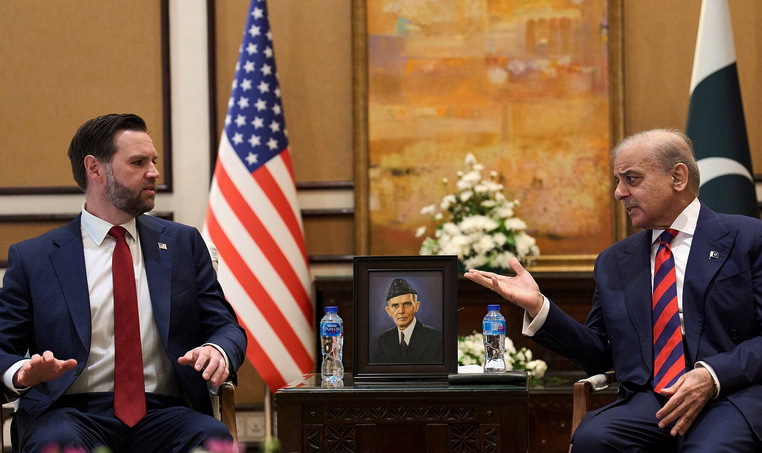
The Serena Hotel in Islamabad was the site of the US-Iran peace talks, where high-ranking officials from both countries met to try to end weeks of fighting. Even after a lot of talking, the two sides were still very far apart on important issues.
“We’ve made it very clear what our red lines are, what things we’re willing to work with them on, and what things we’re not willing to work with them on,” said Vice President JD Vance.
But he didn’t say what those red lines were.
Important Differences in US-Iran Peace Talks
The US-Iran peace talks had a lot of problems because of three main disagreements. Iranian officials say that these problems made it impossible to reach a final agreement.
The first problem was who would control the Strait of Hormuz. The US told Iran to open the strait back up to all ships right away. Iran, on the other hand, said it would only reopen it after a final agreement was signed. This waterway is very important because it is one of the main ways that oil is moved around the world.
Ukraine Russia Easter Ceasefire: Peace or Illusion?
The second problem was Iran’s stockpile of highly enriched uranium. President Trump told Iran to give up or sell all of its weapons. Iran made a counteroffer, but neither side could agree.
Money was the third big problem. Iran asked for about $27 billion in frozen funds to be released so that they could rebuild after the war. It also asked for money to fix the damage caused by airstrikes. The US said no to both requests.
These disagreements kept the US-Iran peace talks from coming to a successful end.
Historic Meeting Even Though No Deal Was Reached
The US-Iran peace talks didn’t end with a deal, but the meeting itself was historic. It was the first time since 1979, when diplomatic ties were cut after the Islamic Revolution, that the two countries had a high-level, in-person meeting.
Iranian troops took over the U.S. Embassy and held American diplomats hostage during that time. Things have been tense between them since then.
Vice President JD Vance met with Mohammad Bagher Ghalibaf, the head of Iran’s Parliament, face to face at this most recent meeting. There was even a handshake between the two leaders, and the talks were said to be calm and polite.
Vali Nasr, an expert on Iran, said, “This is the most serious and long-lasting direct talks between the U.S. and Iran. It shows that both sides want to end this war.”
This shows that the US-Iran peace talks are a step forward in communication, even if they don’t lead to a deal.
Cease-Fire and Ongoing Tensions in the Region
There is a temporary two-week cease-fire while the US and Iran talk about peace. But there is some confusion about whether this cease-fire covers fighting in Lebanon.
Iran says that Israel broke the cease-fire by continuing to attack in Lebanon. On the other hand, Israel says the war is still going on. Prime Minister Benjamin Netanyahu said that the conflict is still going on, even though Iran’s military has gotten weaker.
In the meantime, violence in the area has cost a lot of lives. There have been thousands of deaths and millions of people have had to leave their homes in Iran and Lebanon. Even though the US and Iran are still talking about peace, things are still not stable.
“We leave here with a very simple proposal: a method of understanding that is our final and best offer,” said Vice President JD Vance. He also said, “We’ll see if the Iranians accept it.”
The Future of Peace Talks Between the US and Iran
The US-Iran peace talks that just ended didn’t go well, but both sides haven’t completely ruled out the possibility of more talks in the future. The fact that these talks happened at such a high level shows that both countries may still be open to finding a solution.
People all over the world are watching closely to see what happens when the cease-fire ends. The results of future US-Iran peace talks could have a big effect on peace and stability around the world.