
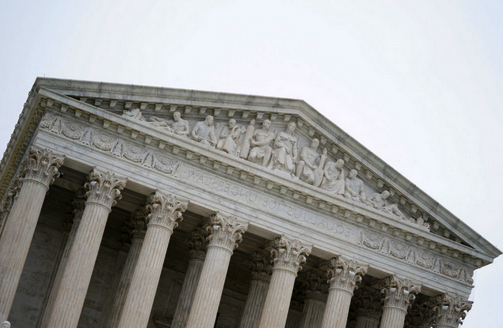
Voting Rights Act faces major scrutiny after Supreme Court ruling on Louisiana district raises redistricting concerns nationwide. The Supreme Court rendered a significant ruling regarding the Voting Rights Act on Wednesday. The second majority Black congressional district in Louisiana was eliminated. Republican-led states may be able to contest Black and Latino electoral districts that often support Democrats as a result of the 6-3 ruling. The decision may alter the balance of power in Congress, raising grave concerns about the Voting Rights Act’s survival and protections.
Whether race played an excessive role in district drawing was at issue in this case. The district was declared illegal by the conservative majority of the court because it leaned too heavily on race. People are now concerned about whether protections against discrimination have been significantly undermined and how the Voting Rights Act will be used in future redistricting instances.
Voting Rights Act Ruling Focuses on Louisiana District
The district at the heart of the dispute is represented by Democrat Cleo Fields. It connects parts of Shreveport, Alexandria, Lafayette, and Baton Rouge across a distance of more than 200 miles. Chief Justice John Roberts referred to the district as a “snake” due to its peculiar appearance. In its ruling, the court declared that the map was unlawful.
Why the Trump IRS lawsuit Is Creating a Huge Legal Problem
Speaking for the six conservatives, Justice Samuel Alito declared, “That map is an unconstitutional gerrymander.”
Because it impacts Section 2, which has long been the primary legal instrument used to combat election practices that are unjust to persons of color, many view the decision as significant for the Voting Rights Act. The future operation of Section 2 safeguards is more unknown now that the Louisiana district has been overturned.
Voting Rights Act Protections Face New Uncertainty
Now, many are wondering how much of the Voting Rights Act’s Section 2 is still in force. Whether this ruling makes it more difficult to contest district maps that are deemed unjust is the primary legal question. Opponents claim that because Section 2 has been a crucial component of the Voting Rights Act, the decision could have far-reaching consequences.
For the three liberal justices, Justice Elena Kagan offered a dissent that stated, “Not much.” “The effects are likely to be serious and long-lasting.” Kagan said, “Today’s decision makes Section 2 almost a dead letter.”
The Voting Rights Act may not provide as much protection as it once did, as the dissent pointed out. The court’s continued division over voting rights and redistricting is demonstrated by the disagreement between the conservative majority and the liberal justices.
Voting Rights Act Decision Could Affect Future District Maps
Additionally, the ruling may alter future state congressional district drawings. Due to potential issues in Black and Latino districts, the decision may alter both the number of voters and the elected officials. Both proponents and opponents of the Voting Rights Act are watching how it will be applied in the upcoming redistricting disputes.
The verdict may also alter the balance of power in Congress if states utilize it to redraw districts in novel ways. As a result, discussions concerning political power and election fairness revolve around the Voting Rights Act.
Voting Rights Act Debate Grows After Supreme Court Split
The argument for the future of the Voting Rights Act has become much more contentious as a result of the 6-3 divide. Supporters of the decision claim that the court examined the illegal use of race in district design. Those who disagree with the ruling claim it makes it more difficult to combat prejudice and may make future legal victories more difficult.
Even though there is still much legal and political discussion around redistricting, representation, and voting rights, the Voting Rights Act remains at the center of these issues. The way those issues are handled across the nation may now be impacted by the Louisiana case.


2 Comments