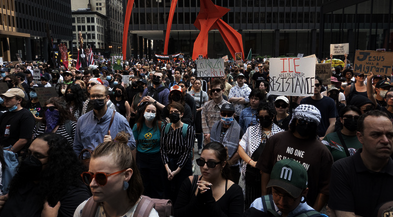
ICE protest Chicago: Felony conspiracy charge dropped. But cheek swab DNA lawsuit and misdemeanor trial continue. A federal judge dismissed the main felony conspiracy charge Thursday against the remaining “Broadview Six” immigration protesters indicted after an ICE protest in Chicago last September. “You four are no longer charged with felonies. Congratulations,” U.S. District Judge April Perry told the four defendants. But the trial on the other misdemeanor charges is still scheduled for May 26.
📋 Key facts about the ICE protest Chicago cases
- Dismissal: Federal judge dropped the main felony conspiracy charge against the remaining “Broadview Six” protesters.
- Judge: U.S. District Judge April Perry: “Congratulations, you all are no longer charged with felonies.”
- Trial: May 26 trial on remaining misdemeanor counts still moving forward.
- Protest: Sept. 26, 2025, demonstration outside ICE facility in Broadview, Chicago suburb, during Trump’s “Operation Midway Blitz” deportations.
- Defendants: Kat Abughazaleh, Andre Martin, Michael Rabbitt, Brian Straw (two defendants already cleared in March).
- DNA lawsuit: Four protesters sued DHS, alleging cheek swabs and CODIS database entry violate Fourth Amendment. Claim DNA collection “targets people for exercising First Amendment rights.”
- CODIS expansion: Database grew from 2M (2004) to 27M (Nov. 2025). FBI collects ~150,000 profiles monthly (1.8M/year).
- Grand jury dispute: Defense attorneys accuse prosecutors of “shell game” over unredacted transcripts; judge will address later.
The group, which includes former congressional candidate Katherine “Kat” Abughazaleh, was indicted in October in relation to a Sept. 26, 2025 demonstration outside an ICE facility in Broadview, a near-west Chicago suburb. The demonstration came at the height of protests against the Trump administration’s mass deportation campaign “Operation Midway Blitz” and the ICE facility became the epicenter of protests and arrests.
Chicago ICE protest sparks new lawsuit Protesters sue over DNA cheek swabs
Many of those who were detained during the ICE protest Chicago were given cheek swabs before being released or charged. Four protesters sued the U.S. Department of Homeland Security on Wednesday, claiming their Fourth Amendment rights against unreasonable search and seizure were violated when the DNA collected from those swabs was entered into a federal database.
By the numbers – ICE protest Chicago and CODIS expansion
2004: 2 million DNA profiles in CODIS
2014: ~14 million profiles
Nov. 2025: ~27 million profiles
Current monthly collection: 150,000 profiles (1.8 million/year)
Protest date: Sept. 26, 2025
Defendants originally: 6; charges dropped against 2; conspiracy dropped for remaining 4
Misdemeanor trial: May 26
The complaint, first reported by the New York Times, says the DNA collection “is part of a surveillance program that targets people for exercising their First Amendment rights.” The lawsuit is against the Combined DNA Index System (CODIS), a database originally designed to solve violent crimes. It now has about 27 million profiles, up from 2 million in 2004, as of November 2025. According to the complaint, the FBI collects approximately 150,000 DNA profiles per month (1.8 million per year), a huge increase during the Trump administration.
Inside the ICE protest Chicago legal battle — conspiracy charge dropped, but grand jury fight goes on
Prosecutors charged Abughazaleh and five others with felony conspiracy, accusing them of conspiring to “interrupt, hinder and impede” a federal immigration agent. They also faced a misdemeanor charge of simple assault. Last week prosecutors announced in a surprise move they would drop the conspiracy charge.
Georgia foster care crisis: Double national average
Defense attorneys called it a win, but suggested it was a strategic move to avoid revealing grand jury transcripts. Defense attorneys accused prosecutors of trying to “have their cake and eat it, too,” when the government did not immediately file the dismissal. Prosecutors said the defense lawyers were “histrionically” misreading normal practice but tried to dismiss sooner than scheduled.
Judge Perry said she will take up the matter of the transcript later this month. Chris Parente, attorney for defendant Brian Straw, said it would take “two lines” of the transcript to show possible prosecutorial misconduct. “They’re playing some kind of weird shell game,” he told reporters. Meanwhile, none of the “Broadview Six” themselves were arrested, but dozens of other protesters were.
Two of the four plaintiffs in the DNA lawsuit were swabbed but never charged, the other two were charged but the cases were dropped. “The federal government has been wrongfully arresting peaceful protesters, collecting their DNA, uploading their genetic profiles to government databases, and storing their DNA samples in federal labs – permanently,” the lawsuit states.
What’s next for the ICE protest Chicago cases?
May 26 trial on misdemeanor assault charges. Judge Perry will rule on grand jury transcripts later this month. The DNA lawsuit against DHS is just beginning. The dismissal of the felony conspiracy charge is a major victory for defendants, but legal battles continue.