
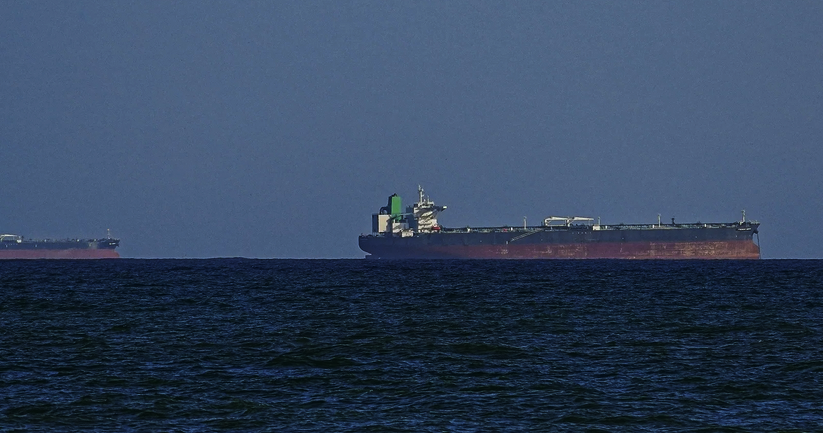
On Saturday, Iran said that the Strait of Hormuz was closed again, stopping commercial ships from passing through one of the most important waterways in the world. The decision comes after tensions with the U.S. have been rising, and Tehran had warned that this would happen if the U.S. kept blocking shipping routes in the area.
This is a big deal because the Strait of Hormuz connects the Persian Gulf to the rest of the world. Every day, a lot of oil from around the world passes through it. Any disruption can quickly change the prices of energy, trade, and stability around the world.
The semi-official Fars news agency in Iran was the first to report the closure of the Strait of Hormuz. They quoted a military official who strongly criticized what the U.S. did. The report says that the official accused the US of continuing to act aggressively at sea. “As long as the US does not agree to the complete freedom of navigation for vessels …. the situation in the Strait of Hormuz will remain tightly controlled and in its previous state,” the military official said, according to Fars.
Closing the Strait of Hormuz and rising maritime conflict
The closing of the Strait of Hormuz has made an already tense situation even worse. Officials from the U.S. and the U.K. say that violence in the area is on the rise. A U.S. defense official and the U.K. Maritime Trade Operation say that Iranian forces have shot at several commercial ships passing through the area.
Strait of Hormuz Reopening: Is Peace Finally Coming?
A U.S. official said that at least three attacks on ships happened on Saturday. The U.K. said that two attacks happened. At least one ship was hit and damaged, but there were no reports of injuries right away. These events have made people worry about the safety of shipping around the world while the Strait of Hormuz is closed.
Audio recordings of the attacks show that the crews were scared and confused. One report says that a ship was allowed to enter the waterway, but then it was shot at right away. Then, the ship’s dispatcher told it to turn around, showing how the closure of the Strait of Hormuz made things so unpredictable.
Shipping data also shows that two of the ships that were attacked were Indian ships. One of them was carrying about 2 million barrels of oil from Iraq. This detail makes it even clearer that the closure of the Strait of Hormuz is hurting not only businesses in the area but also businesses around the world.
The closure of the Strait of Hormuz affects trade and the supply of oil around the world.
The closing of the Strait of Hormuz has immediate effects on markets around the world. This road is one of the most important places in the world for moving oil. When it is interrupted, oil prices usually go up and supply chains become less stable.
The U.S. Central Command said that 23 ships had already turned around after getting orders because of the blockade earlier in the week. It is still not clear how many ships were affected after the Strait of Hormuz was officially closed, but the number is likely to rise.
Because of this, shipping companies are being more careful. A lot of people might decide to stay away from the area until things get better. This hesitation could cause delays, higher shipping costs, and more stress on the world’s energy supplies.
The closure of the Strait of Hormuz could hurt peace talks.
The Strait of Hormuz’s closing is especially important because it happens right when diplomatic efforts were starting to work. President Donald Trump recently said he was hopeful about a deal with Iran.
Trump said he thought a deal would be reached “in a day or two,” which meant that talks were going well. He also said that Iran had agreed to several important conditions set by the United States, such as permanently stopping uranium enrichment.
Even though things look good, the closure of the Strait of Hormuz could get in the way of those talks. It was expected that negotiators from both countries would meet over the weekend to talk more. But now it’s not clear if those meetings will happen.
The White House hasn’t said anything publicly about the latest news, which leaves a lot of questions about the future of diplomacy in the area.
The closure of the Strait of Hormuz makes people around the world worried about security.
The closure of the Strait of Hormuz is not just a problem for the region; it affects security around the world. The waterway is important for trade between countries, and any military action there makes the chance of a bigger war more likely.
For weeks now, tensions between Iran and the US have been rising, with both sides accusing the other of being aggressive. The current situation shows how quickly things can get out of hand when important shipping routes are involved.
If the Strait of Hormuz stays closed, it could cause more military conflicts, mess up global markets, and make it harder to bring about peace. Many countries are keeping a close eye on the situation because their economies depend on having stable energy supplies.
The closure of the Strait of Hormuz makes the future uncertain.
The closure of the Strait of Hormuz leaves the area in a state of uncertainty for the future. There is still hope for diplomatic solutions, but the recent rise in violence makes things harder.
The situation shows how hard it is to find a balance between conflict and cooperation in world politics. The closure of the Strait of Hormuz will continue to be a big problem for governments, businesses, and regular people around the world until both sides come to an agreement.

1 Comment