
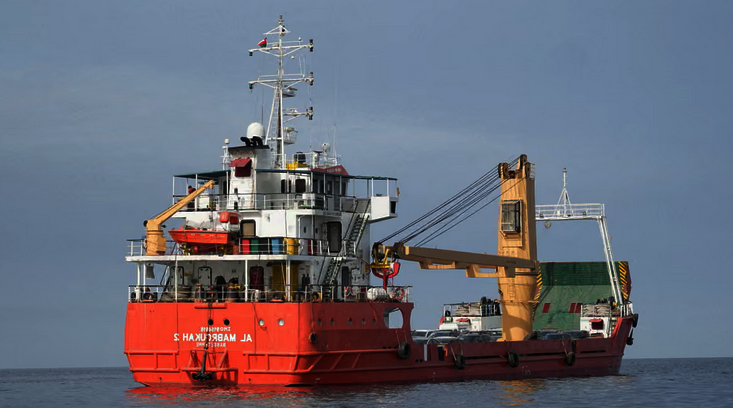
The reopening of the Strait of Hormuz has made headlines around the world. People are hopeful that tensions in the Middle East will ease, but they are also unsure of what will happen next. Iran’s foreign minister said that the reopening of the Strait of Hormuz is now complete and that commercial ships can once again pass through this important waterway. The news had an immediate effect on markets around the world, lowering oil prices. But experts are still cautious and say that the Strait of Hormuz reopening may not mean that shipping will return to normal right away because there are still risks in the area.
Iran Says the Strait of Hormuz Will Reopen
Iranian officials confirmed that the Strait of Hormuz is open again and that ships can now pass through it, but only under certain conditions. A high-ranking military official said that ships would be able to pass, but only on certain routes and with the permission of Iran’s naval forces.
Before the war started, the Strait of Hormuz was one of the most important shipping routes in the world, carrying almost a fifth of the world’s oil and gas. Global energy markets were greatly affected by its closure. Donald Trump wrote a lot of posts on social media to celebrate the reopening of the Strait of Hormuz. He said that Iran had promised never to close the waterway again.
Select Inside the Lebanon ceasefire Deal Backed by Iran
Inside the Lebanon ceasefire Deal Backed by Iran
Trump wrote, “A GREAT AND BRILLIANT DAY FOR THE WORLD!”
Even though things look good, the U.S. has decided to keep its naval blockade on Iranian ports for now, which makes things more complicated.
The Strait of Hormuz is reopening, but there are mixed signals.
The reopening of the Strait of Hormuz is a sign of progress, but leaders’ conflicting statements show that tensions are still high.
Benjamin Netanyahu made it clear that military action against Hezbollah is not over.
“We haven’t finished the job yet. Netanyahu said, “We have plans to deal with the remaining rocket threat and the drone threat.”
Reports of an Israeli drone strike in southern Lebanon came out soon after his statement. This showed how unstable the situation still is, even though the Strait of Hormuz has reopened. Israeli officials also said that their troops would not leave Lebanon and that more military action could still happen if necessary.
The reopening of the Strait of Hormuz is connected to the ceasefire in Lebanon.
The Strait of Hormuz is reopening at the same time that a 10-day ceasefire in Lebanon is in place. The ceasefire has temporarily stopped fighting between Israel and Hezbollah, giving civilians a break after weeks of heavy violence. Even though officials warned that it might not be safe yet, the cease-fire has let people who had to leave Lebanon start to go home. A lot of people ignored those warnings and made long lines as they tried to get to their communities by crossing damaged bridges. Some people think that the reopening of the Strait of Hormuz is part of a larger diplomatic effort to ease tensions in the area. There are still talks going on between several countries, and diplomats are trying to stop a full-scale war from happening again.
The reopening of the Strait of Hormuz has effects on the world economy.
The reopening of the Strait of Hormuz has already had a big effect on oil prices around the world. Prices went up a lot because the waterway closed earlier, which added to inflation and worries about a slowdown in the global economy. The markets have reacted positively now that the Strait of Hormuz is open again. Experts, on the other hand, say that there is still a lot of uncertainty and that shipping companies may not want to start doing business as usual right away. Leaders from around the world have praised the news but are asking for long-term solutions. Emmanuel Macron said that the reopening was a good thing, but Keir Starmer said that any deal must be “lasting and workable.”
Reopening the Strait of Hormuz and continuing diplomatic efforts
There are still a lot of diplomatic efforts going on to reopen the Strait of Hormuz. About 40 countries’ representatives met in Paris not long ago to talk about how to keep the waterway safe and secure. In the meantime, Pakistan has been a big part of the mediation process. Asim Munir is in Tehran right now to help move talks forward for a more stable and long-lasting peace.
Tahir Andrabi, the spokesperson for Pakistan’s foreign ministry, stressed how important it is for the region to be stable.
“Peace talks need peace in Lebanon and an end to armed attacks in Lebanon.”
Even with these efforts, it’s still unclear how quickly the reopening of the Strait of Hormuz will lead to normal shipping conditions.
The Strait of Hormuz raises questions about the future stability of the region.
The reopening of the Strait of Hormuz is a big deal, but there are still a lot of questions that need to be answered. The U.S. is still blocking Iranian shipping, and tensions between regional powers have not completely calmed down. President Donald Trump also said that Iran had agreed to stop its nuclear program, but Iranian officials have not confirmed this. The U.S. and Iran are likely to keep talking, which could lead to a bigger deal.
Military activity in Lebanon and ongoing disagreements between world powers show how unstable things are, even after the Strait of Hormuz reopened.
For now, the world is watching closely to see if this step will bring about lasting peace or just a break in a much bigger fight.
2 Comments